

Dr. Paras Diwan remains the most cited name in Indian family law scholarship, and this Family Law volume — updated by Peeyushi Diwan — is the single-book answer to the LLB family law syllabus. It spans the personal laws as they are actually examined: Hindu law (marriage, divorce, maintenance, adoption, guardianship, joint family and partition), Muslim law (nikah, mahr, talaq, inheritance), and the Special Marriage Act, with Christian and Parsi law essentials.
The 2026 reprint carries the modern case law that examiners expect — from Shayara Bano on triple talaq to Vineeta Sharma on daughters’ coparcenary rights — woven into Diwan’s famously readable narrative style.
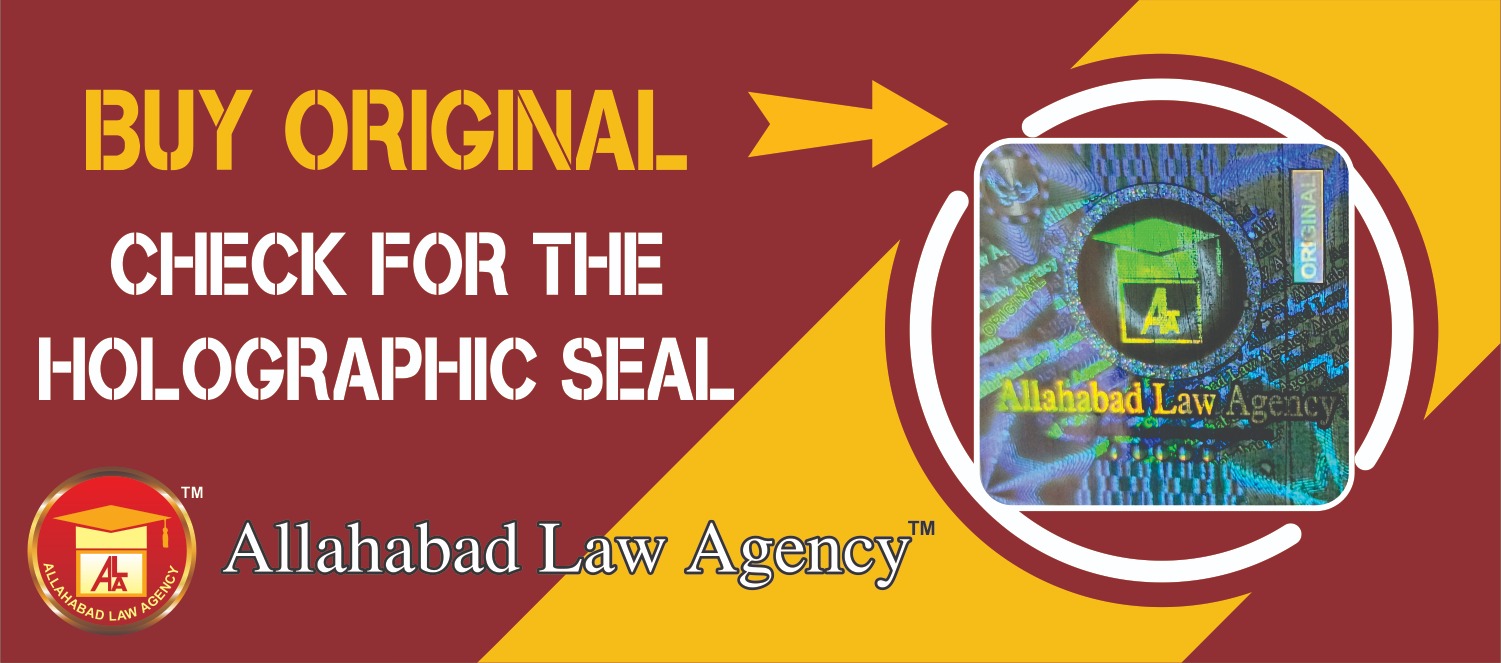
A standard text for Family Law I and II papers and judicial services mains. Allahabad Law Agency — authentic editions carry the holographic seal.
Family Law by Dr. Paras Diwan & Peeyushi Diwan Jain is a leading textbook on Indian family law, widely prescribed for LLB and BA LLB students and valued as a reference by academics and practitioners. The book presents the personal laws of India in a structured, readable manner, blending statutory provisions with landmark judicial decisions.
It covers the major aspects of family law in India, including marriage and its essentials, restitution of conjugal rights, judicial separation, divorce and the grounds for it, maintenance, guardianship, adoption, and matters of succession. The treatment spans the personal laws applicable to different communities, helping students understand both the principles and their practical application.
Key highlights:
- Authoritative coverage of Indian family and personal law
- Statutory provisions explained alongside leading case law
- Clear, exam-oriented presentation suited to university syllabi
- Authored by Dr. Paras Diwan, a respected name in the field, with Peeyushi Diwan Jain
Published by Allahabad Law Agency and supplied fresh from the publisher in its current edition, this title is an essential companion for anyone studying or practising family law in India.
What’s Inside – Chapter-wise Contents
Family Law by Dr. Paras Diwan and Peeyushi Diwan covers the personal laws of Hindus, Muslims, Christians, Parsis and Jews in one volume, in fifteen parts:
Part I – Preliminary
- Hindus, Muslims, Christians, Parsis and Jews
- Schools of Law, Migration, Domicile, Residence and Problem of Conflict of Personal Laws
Part II – Marriage
- Concept of Marriage and Theories of Divorce
- Marriages under Hindu Law, Muslim Law, Christian Law and Parsi Law
Part III – Dowry, Dower, Consortium, Cohabitation and Matrimonial Home
- Dowry and Dower
- Consortium, Cohabitation and Matrimonial Home
Part IV – Matrimonial Causes
- Nullity of Marriage
- Separation Agreement and Judicial Separation
- Restitution of Conjugal Rights and Remedy for Breach of Duty to Cohabit
Part V – Matrimonial Causes: Divorce
- Divorce without the Intervention of the Courts
- Fault Grounds of Divorce
- Divorce by Mutual Consent
- Irretrievable Breakdown of Marriage
Part VI – Matrimonial Causes (contd.)
- Fair-Trial-to-Marriage Rule and Bar to Remarriage
- Bars to Matrimonial Relief
- Reconciliation
Part VII – Ancillary Reliefs
- Alimony and Maintenance
- Custody, Maintenance, Education of, and Access to, Children
- Property Adjustment and Financial Provisions
Part VIII – Matrimonial Causes (contd.)
- Jurisdiction and Procedure
- The Family Courts
Part IX – Guardianship and Custody
- Guardianship and Custody under Hindu Law
- Guardianship and Custody under Muslim Law
Part X – Parentage and Adoption
- Parentage, Illegitimate and Legitimate Children and Acknowledgement of Paternity under Muslim Law
- Adoption under Hindu Law
- Adoption under Secular Law
Part XI – Maintenance
- Maintenance under Muslim Law
- Maintenance under Hindu Law
- Maintenance under Muslim Women
- Maintenance under the Criminal Procedure Code
Part XII – Hindu Joint Family System
- Mitakshara Joint Family
- Dayabhaga Joint Family
- Alienations
- Son’s Pious Obligation to Pay Father’s Untainted Debts and Doctrine of Antecedent Debts
- Partition
- Woman’s Property: Stridhan
Part XIII – Succession
- Succession under Hindu Law
- Succession under Marumakkattayam and Aliyasantana Laws
- Succession under Muslim Law
- Administration of Estates
- Wills under Muslim Law
Part XIV – Gifts
- Gifts under Hindu Law
- Hiba (Gifts)
Part XV – Endowments and Wakfs
- Hindu Endowments
- Muslim Wakfs
Includes a Table of Cases.
Reviews
There are no reviews yet.